
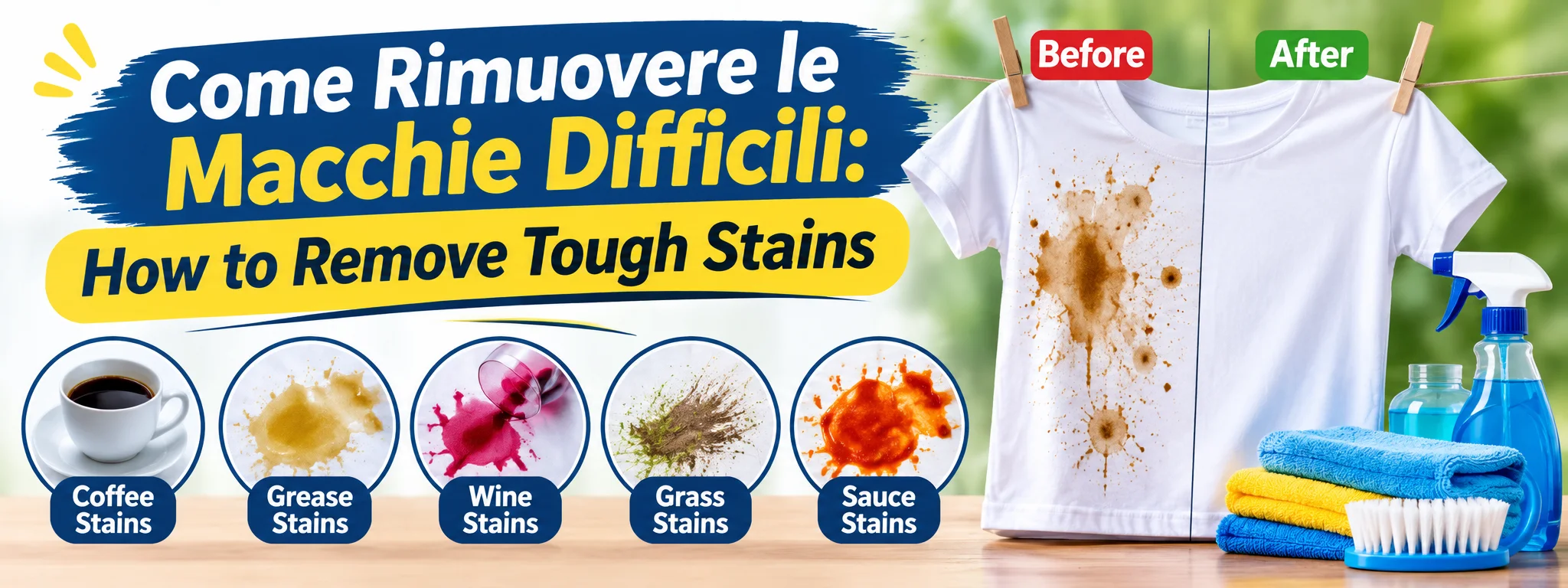
Removing stubborn marks from clothing, carpets, furniture, and other household fabrics can be challenging. Some stains disappear with a simple wash, while others require special attention and the right cleaning products. Understanding Come Rimuovere Macchie Difficili can help you deal with everyday spills, maintain your fabrics, and prevent unnecessary damage to items you want to keep.
Every stain has different characteristics. Grease, coffee, wine, ink, blood, and food spills do not respond to the same cleaning methods. Choosing an unsuitable product or applying too much heat can make the problem worse.
The key is to recognize the stain, consider the material, and select an appropriate treatment. This guide explores practical stain-removal methods, household cleaning ingredients, useful precautions, and techniques for dealing with older marks. Whether you are cleaning a favorite shirt or refreshing upholstered furniture, these suggestions can make the process easier.
Come Rimuovere Macchie Difficili: Start With the Right Cleaning Approach
Successful stain removal begins before you apply detergent or any other cleaning solution. Understanding the condition of the fabric and the nature of the stain helps you avoid unnecessary damage.
Remove Excess Material Immediately
When something spills, respond as quickly as possible. Use a clean paper towel or absorbent cloth to collect excess liquid before it penetrates further into the material.
Press gently against the affected area rather than rubbing it. Rubbing can push particles deeper into the fibers and enlarge the stained section.
For thicker substances, carefully lift the remaining material using a spoon. Avoid scraping the fabric aggressively.
Check the Fabric Care Instructions
Not every material can tolerate the same cleaning products. Cotton and polyester are generally easier to wash than delicate materials such as silk, wool, suede, or certain specialty fabrics.
Read the manufacturer’s care instructions before beginning treatment. Pay attention to recommended washing temperatures, drying methods, and restrictions on particular cleaning products.
For valuable or delicate items, professional cleaning may be preferable to experimenting with household solutions.
Determine What Caused the Stain
Identifying the substance is an important part of choosing an effective cleaning method.
- Oil-based marks generally require grease-removing detergents.
- Coffee and juice stains often respond to appropriate liquid detergents.
- Blood and other protein-based stains should initially be treated with cold water.
- Ink marks may require a specialized cleaning product.
- Mud and soil are easier to manage after loose material has been removed.
Understanding these differences can prevent ineffective treatments and repeated washing.
Best Ways to Remove Different Types of Stubborn Stains
Some household stains appear frequently, but their removal methods vary. The following techniques explain how to approach common cleaning problems without unnecessarily exposing fabrics to harsh treatments.
Removing Grease and Cooking Oil
Oil stains from butter, cooking ingredients, sauces, and greasy foods can leave visible marks on shirts, trousers, and tablecloths.
Begin by lifting excess oil with a paper towel. Avoid pressing too firmly because this can spread the grease.
Next, cover the affected area with a small amount of cornstarch or baking soda. Allow it to sit for approximately 15–30 minutes so it can absorb some surface oil. Remove the powder gently.
Apply a little grease-cutting dishwashing liquid or suitable laundry detergent. Follow the product instructions, rinse appropriately, and wash the item according to its care label.
Check the fabric before placing it in a dryer. If an oily mark remains, repeat a compatible treatment instead of applying heat.
Removing Coffee and Tea Marks
Coffee and tea spills can leave brown discoloration on clothing, curtains, and washable household fabrics.
For washable materials, rinse the affected area with cool or lukewarm water when permitted by the care instructions. Applying water from the reverse side can help move some of the residue away from the fibers.
Use a small quantity of liquid laundry detergent and allow it to work according to the manufacturer’s directions.
Older coffee and tea marks may need a fabric-compatible oxygen-based stain remover. Check whether the product is suitable for colored materials before applying it.
If the drink contained milk or cream, consider that additional protein residue may be present. Avoid beginning with high temperatures.
Removing Red Wine and Berry Juice
Red wine, cherry juice, strawberry juice, and similar spills contain colored compounds that can leave noticeable marks.
Start by absorbing the excess liquid with a clean cloth. Do not rub, as this may spread the pigment.
Rinse washable fabrics with cool water when appropriate. Apply a suitable liquid detergent or stain-removal product and follow its recommended treatment time.
For persistent discoloration, an oxygen-based cleaner may help on compatible fabrics. Always check the instructions before using it on colored or delicate materials.
Avoid experimenting with combinations of cleaning chemicals. Use one suitable product at a time.
Removing Blood Marks From Fabric
Blood requires a different cleaning approach from ordinary food and drink stains.
For washable fabrics, rinse fresh marks with cold water as soon as possible. Gently blot the affected section and apply a compatible liquid laundry detergent.
An enzyme-based detergent may help with remaining protein residue. Follow the manufacturer’s directions and rinse thoroughly.
Hydrogen peroxide is sometimes used on suitable light-colored materials, but it can cause fading or discoloration. Test it in an inconspicuous area first and avoid using it on delicate fabrics without professional advice.
If the stain is extensive, old, or located on valuable upholstery, consider using a professional cleaning service.
Removing Ink and Pen Marks
Ink can be difficult to remove because different pens and markers contain different coloring agents and ingredients.
First, identify whether the mark comes from a ballpoint pen, washable marker, or permanent marker. This helps determine which cleaning product may be appropriate.
For washable materials, place an absorbent cloth underneath the stained section if possible. Blot carefully to limit the transfer of ink.
Some ballpoint ink stains respond to rubbing alcohol, but this substance can affect fabric dyes and finishes. Test a small hidden section first and follow the care instructions.
Use only a small quantity of a compatible product and replace the absorbent material as it collects ink. Specialized ink removers may be more suitable for persistent marks.
Quick Guide to Common Household Stains
The following reference table provides an overview of suitable first treatments and important precautions.
| Stain | Suggested Cleaning Method | Main Precaution |
|---|---|---|
| Cooking oil | Absorb with cornstarch and apply suitable detergent | Check before machine drying |
| Coffee | Rinse and pretreat with liquid detergent | Consider milk or cream residue |
| Tea | Use a compatible laundry detergent | Avoid unsuitable high temperatures |
| Red wine | Blot and rinse with cool water | Do not rub the stain |
| Blood | Use cold water and suitable detergent | Avoid hot water initially |
| Ink | Try a compatible specialized ink remover | Test for color damage |
| Mud | Let dry, brush away loose dirt, and wash | Do not spread wet soil |
| Tomato sauce | Remove solids and pretreat with detergent | Consider both oil and pigment |
| Sweat | Use appropriate laundry pretreatment | Check fabric compatibility |
Household Ingredients That Can Help With Stain Removal
Many people prefer using simple household ingredients for everyday cleaning. Some can be useful, but their effectiveness depends on the material and type of stain.
Baking Soda for Oil and Odor Control
Baking soda is commonly used in household cleaning because it can absorb certain odors and surface oils.
For a fresh grease mark, sprinkle a small amount over the affected section. Leave it briefly before brushing the powder away.
It may also help with selected household cleaning tasks. However, it is not suitable for every fabric, and excessive scrubbing can affect delicate fibers.
White Vinegar for Selected Cleaning Tasks
White vinegar is sometimes used to address mineral deposits and certain household odors.
Its acidic properties mean it should not be applied indiscriminately. Sensitive fabrics, natural stone, and certain surface finishes may be damaged by vinegar.
Never combine white vinegar with chlorine bleach because this can produce hazardous chlorine gas.
Mild Soap for Everyday Spills
Mild soap and water can be a useful starting point for fresh, water-soluble stains.
Mix a small amount of suitable soap with water, apply it gently, and blot the affected area. Use a clean, damp cloth to remove remaining soap when appropriate.
This approach is relatively simple, but it should only be used when the material can safely tolerate moisture.
How to Deal With Old and Dried Stains
Older marks are often more difficult to remove because the original substance may have dried and attached itself to fabric fibers.
A patient cleaning process is usually more appropriate than immediately applying a powerful chemical.
Prepare the Affected Material
Begin by removing loose dirt and solid particles. For dried mud, allow the material to become completely dry before brushing away excess soil.
For washable clothing, check the care label and select a compatible pretreatment product.
Some washable materials can tolerate soaking in cool water, although this is not appropriate for every fabric or stain.
Apply Suitable Pretreatment
Choose a product designed for the particular stain. Enzyme-based detergents, oxygen-based removers, and ordinary liquid detergents serve different cleaning purposes.
Follow the recommended application amount and treatment time. Leaving a product on the fabric longer than instructed does not necessarily improve the result.
Repeat the Process Carefully
Some older marks need more than one treatment. After washing, inspect the material before drying.
If discoloration remains, repeat the appropriate method when the care instructions allow it. Avoid repeatedly increasing the product concentration or combining different cleaners.
For stubborn marks that remain after suitable treatments, professional assistance may protect the material from further damage.
Five Common Stain-Removal Mistakes to Avoid
Incorrect cleaning habits can make ordinary stains more difficult to manage. Keep these common mistakes in mind:
- Scrubbing too hard: Aggressive rubbing can damage fibers and spread discoloration.
- Applying hot water too soon: Heat may cause protein-based stains to become more difficult to remove.
- Ignoring product instructions: Incorrect application can lead to fading or surface damage.
- Combining cleaning chemicals: Incompatible ingredients can create dangerous chemical reactions.
- Using a dryer before checking: Heat may make remaining stains harder to remove.
A careful cleaning routine is generally more effective than rushing through several treatments.
Cleaning Carpets, Sofas, and Upholstered Furniture
Removing stains from furniture and carpets requires extra attention because liquids can travel beneath the visible surface.
Use Minimal Moisture
Begin by absorbing excess liquid with a clean, dry towel. Apply a suitable upholstery cleaning product in a controlled amount.
Blot from the outer edge toward the center of the stain to reduce the risk of spreading.
Avoid soaking the material. Excess moisture may remain inside the padding and contribute to unpleasant odors or material deterioration.
Follow the Manufacturer’s Instructions
Different upholstery materials have different cleaning requirements.
Cotton, synthetic upholstery, leather, suede, and wool rugs may need entirely different treatments. A cleaning solution that works on one material may damage another.
Always check the manufacturer’s recommendations and perform a small compatibility test where permitted.
For valuable furniture, large stains, or delicate rugs, professional upholstery cleaning is a sensible option.
Selecting an Appropriate Stain-Removal Product
Choosing the correct cleaner is just as important as applying it properly.
Different products are designed for different cleaning purposes:
- Enzyme detergents: Useful for certain food, sweat, and protein-related residues.
- Oxygen-based cleaners: Designed to help remove selected organic stains from compatible materials.
- Grease-cutting detergents: Helpful for cooking oil and oily food marks.
- Specialized ink removers: Formulated for particular types of pen and marker stains.
- Upholstery cleaners: Developed for specific furniture and carpet materials.
Before using any product, read the label carefully. Follow its instructions regarding dilution, application time, ventilation, and protective equipment.
Store cleaning products safely, away from children and pets.
Never mix chlorine bleach with ammonia, vinegar, acids, or other household cleaning products. Such combinations can release hazardous gases.
Frequently Asked Questions
1. How can I remove difficult stains from clothes?
Start by identifying the substance and checking the fabric-care label. Remove excess material, apply a compatible cleaning product, and wash according to the manufacturer’s instructions.
2. Can dried stains be removed successfully?
Many dried stains can still respond to appropriate pretreatment. However, the outcome depends on the stain’s age, composition, fabric type, and previous cleaning methods.
3. Is baking soda effective against stubborn stains?
Baking soda can absorb some surface grease and odors. However, it is not a universal solution for ink, strong pigments, or protein-based marks.
4. Which water temperature is best for stain removal?
Cold water is generally recommended as an initial treatment for blood and other protein-based stains. For other stains, follow the fabric-care instructions and cleaning product directions.
5. When is professional stain removal necessary?
Professional cleaning is recommended for valuable clothing, delicate materials, leather, expensive upholstery, and stains that remain after appropriate home treatments.
Final Thoughts
Understanding Come Rimuovere Macchie Difficili makes it easier to manage everyday spills and maintain the appearance of clothing, carpets, and household fabrics. The most effective approach involves identifying the stain, selecting a suitable cleaning method, and following the material’s care instructions.
Whether you are dealing with cooking oil, coffee, red wine, blood, or ink, patience and proper treatment can improve your cleaning results. Avoid aggressive scrubbing, unnecessary heat, and incompatible chemical combinations.
With a consistent cleaning routine and the right products, you can protect your household fabrics, reduce avoidable damage, and keep everyday items looking clean and presentable.